How AI agents turn months into weeks, and why data still has the final say
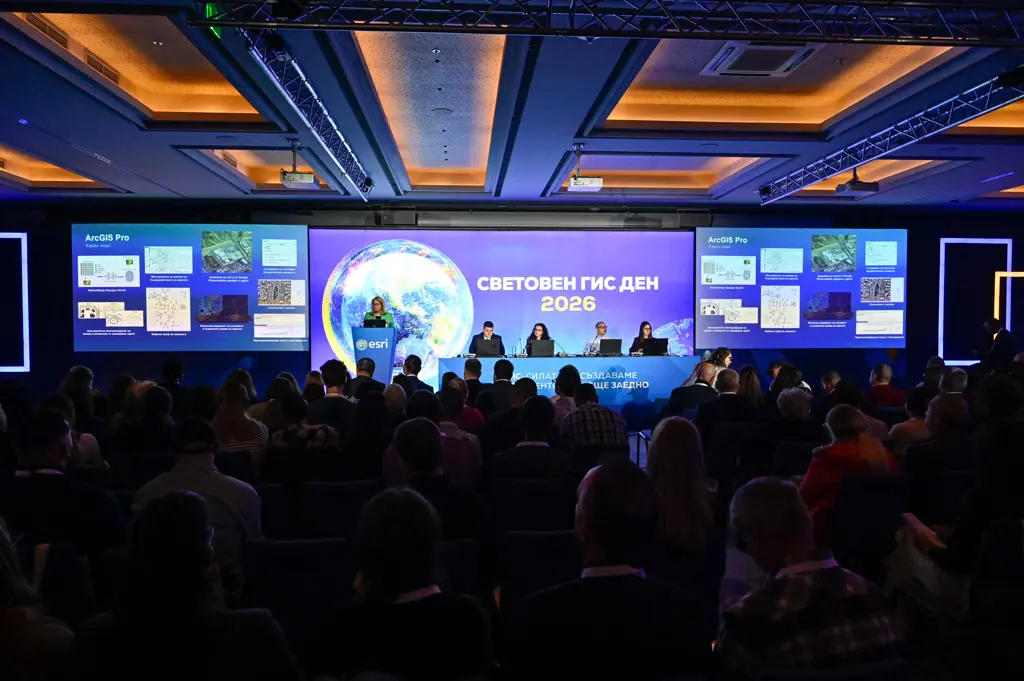
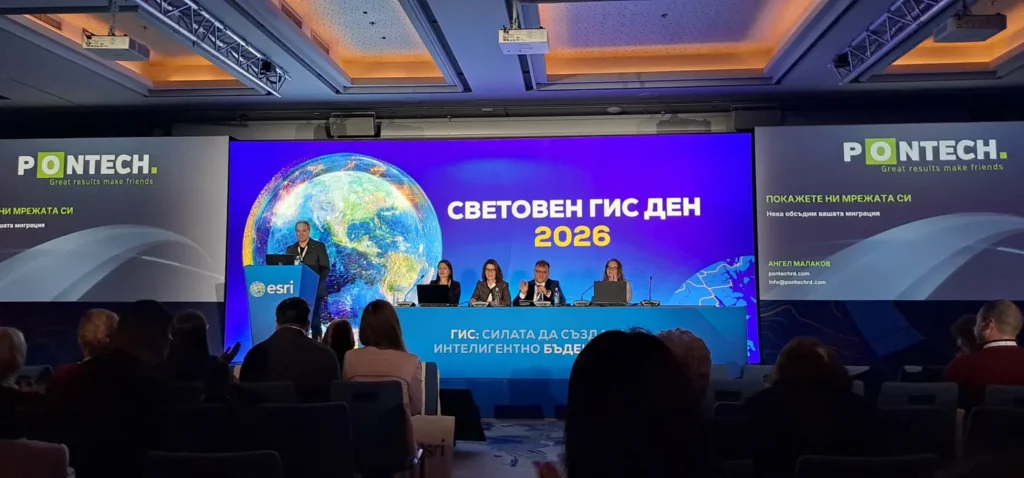
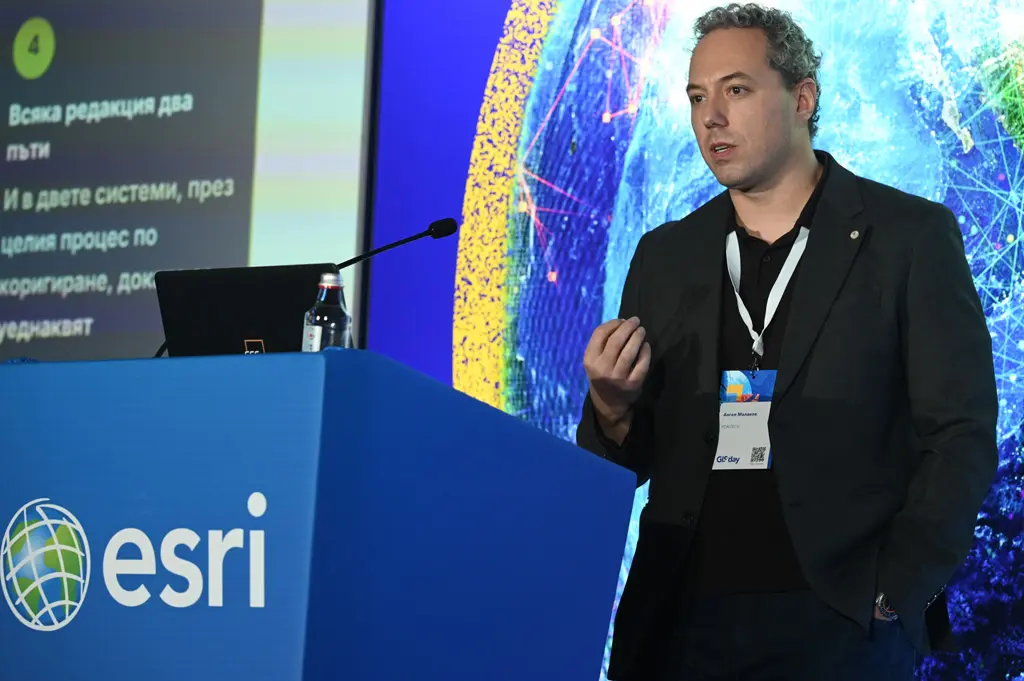
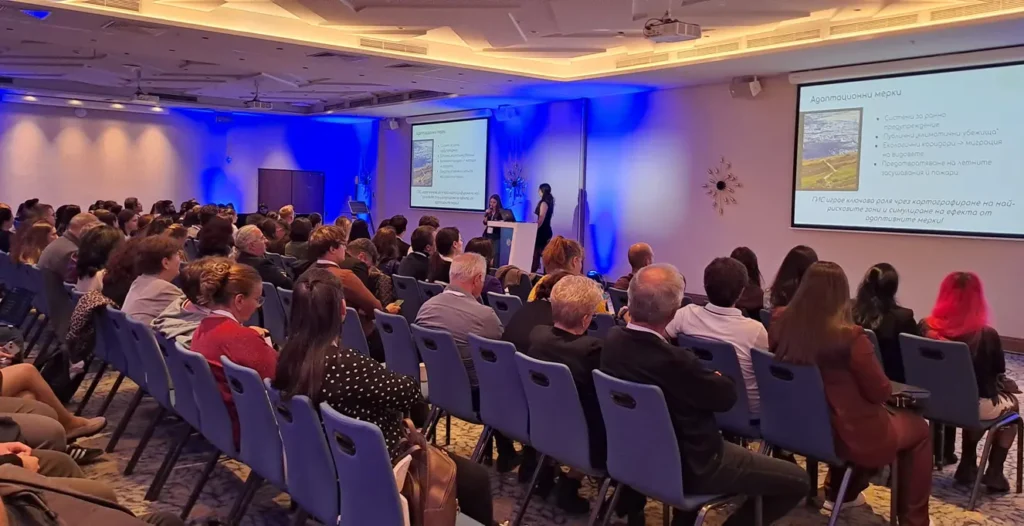
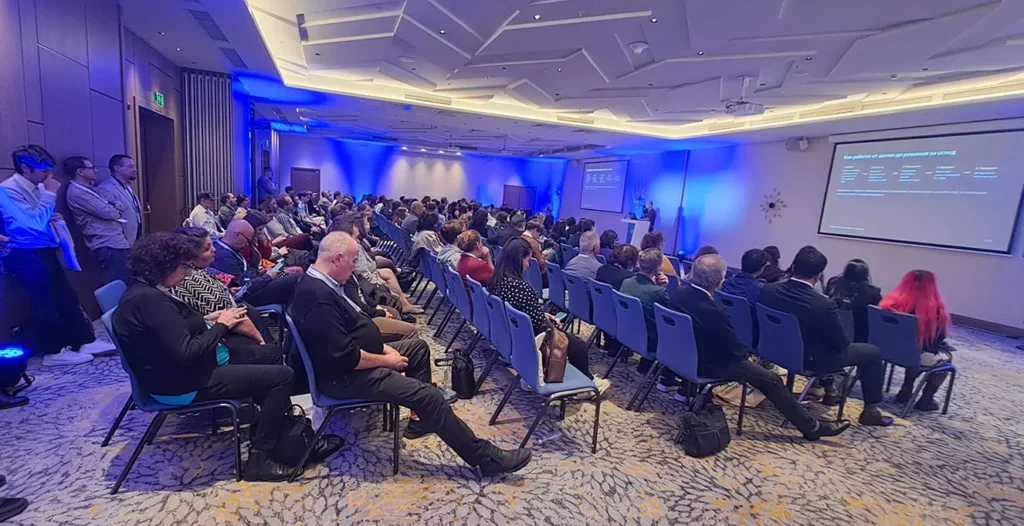
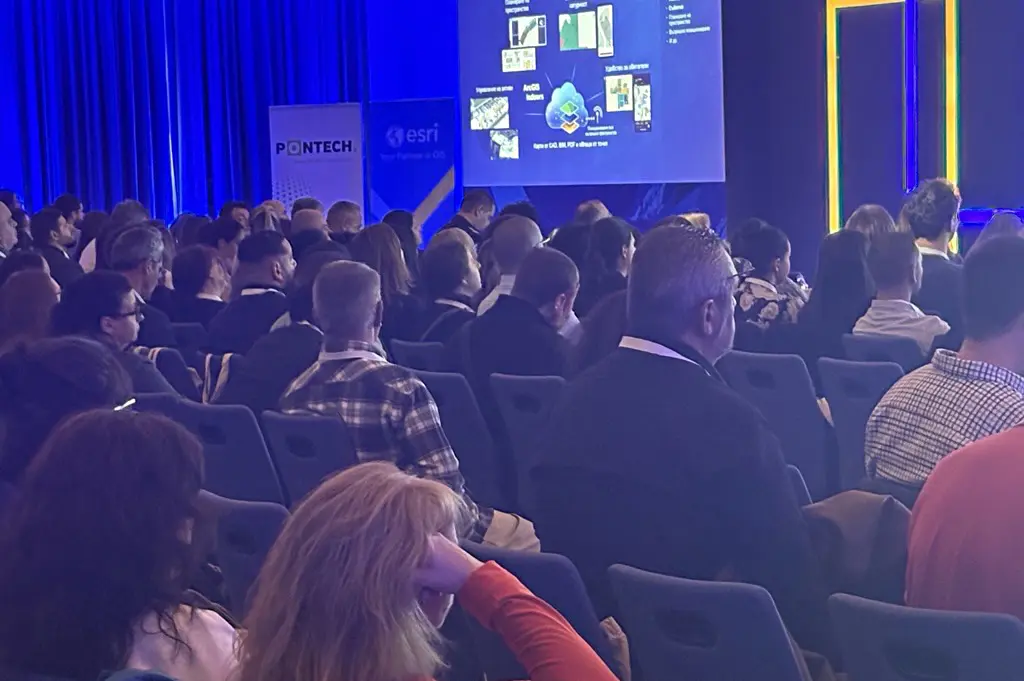
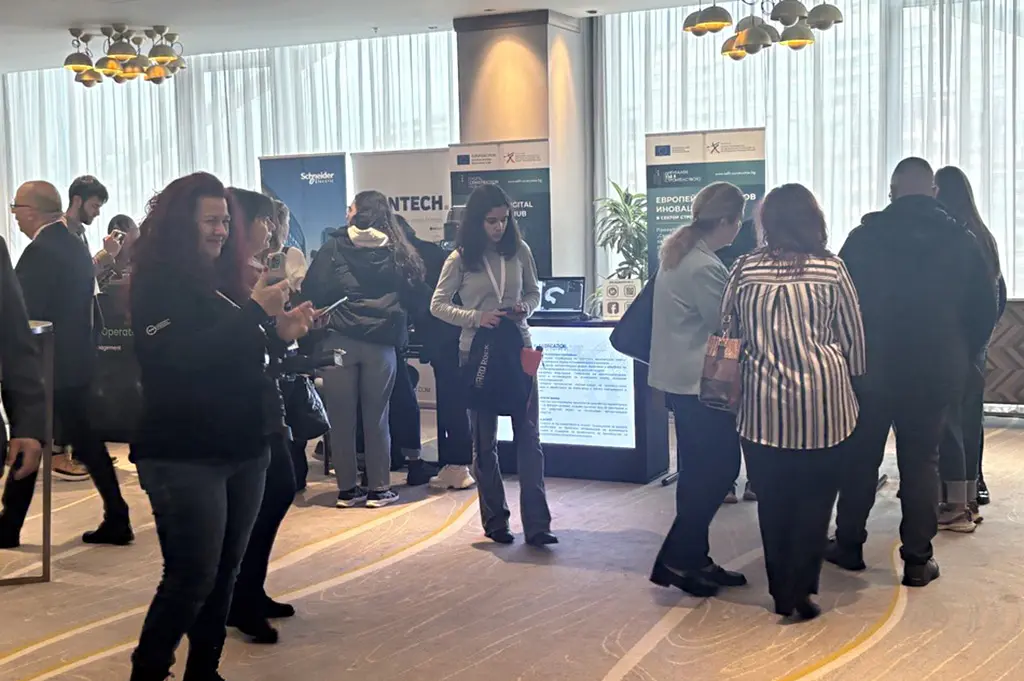
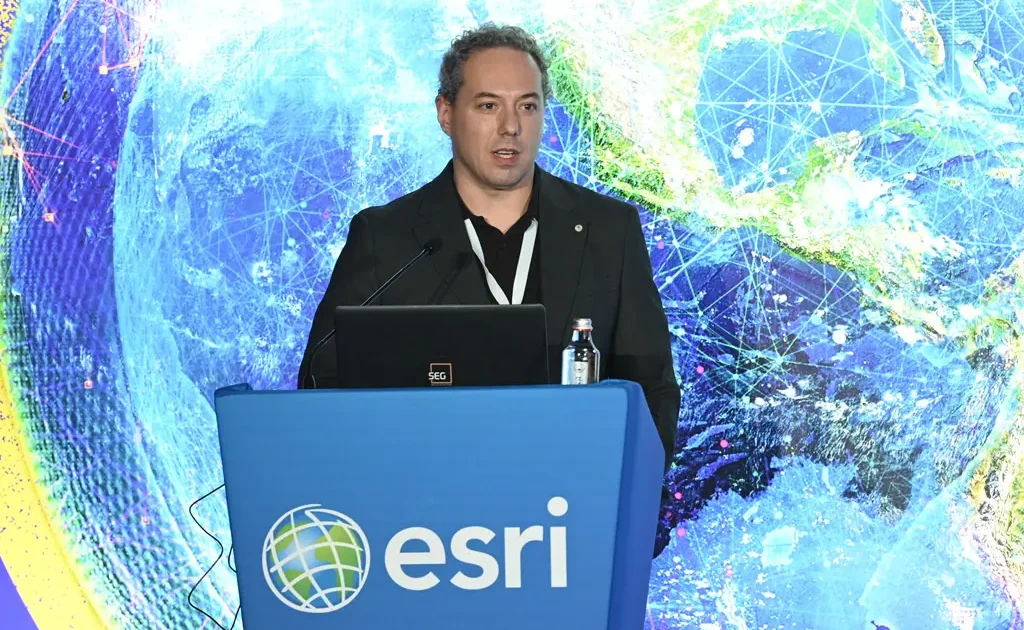
On 18 November 2026, PONTECH took part in World GIS Day 2026, organised by Esri Bulgaria in Sofia under the motto “GIS: the power to build an intelligent future together”. Angel Malakov, Business Manager of PONTECH Bulgaria, gave a talk titled “Accelerated migration to Utility Network: How does agentic AI turn months into weeks?”
The context: every Geometric Network has to be migrated
ArcMap is no longer supported, and ArcGIS Pro does not work with the Geometric Network. That is why every utility network has to move to Utility Network: electricity, water, gas, district heating and telecommunications. AI agents promise to cut the migration from months to weeks. The question is what happens when the data is not perfect.
What a real project shows
Angel Malakov presented data from a migration PONTECH is delivering for a regional electricity distribution company with more than 15 years of GIS history. About half of the effort goes into data correction: geometry, attributes and connectivity. Modelling takes 20%, testing 15% and integrations 10%. The data migration itself is only 5%. Around 40 feature classes became close to 300 asset types. Over two years, the team ran 20 test migrations without interrupting the company’s operations.
Where AI agents help
> They are fast at the routine work. Agents propose the mapping, then load and validate the data much faster than by hand.
> They don’t fix data they don’t know is wrong. Every error in the old network, such as a wrong connection or a missing attribute, shows up in the new model unless it is corrected first.
> Experts keep deciding. Which connections are allowed, and how the network is really operated, is known by the people who know the data.
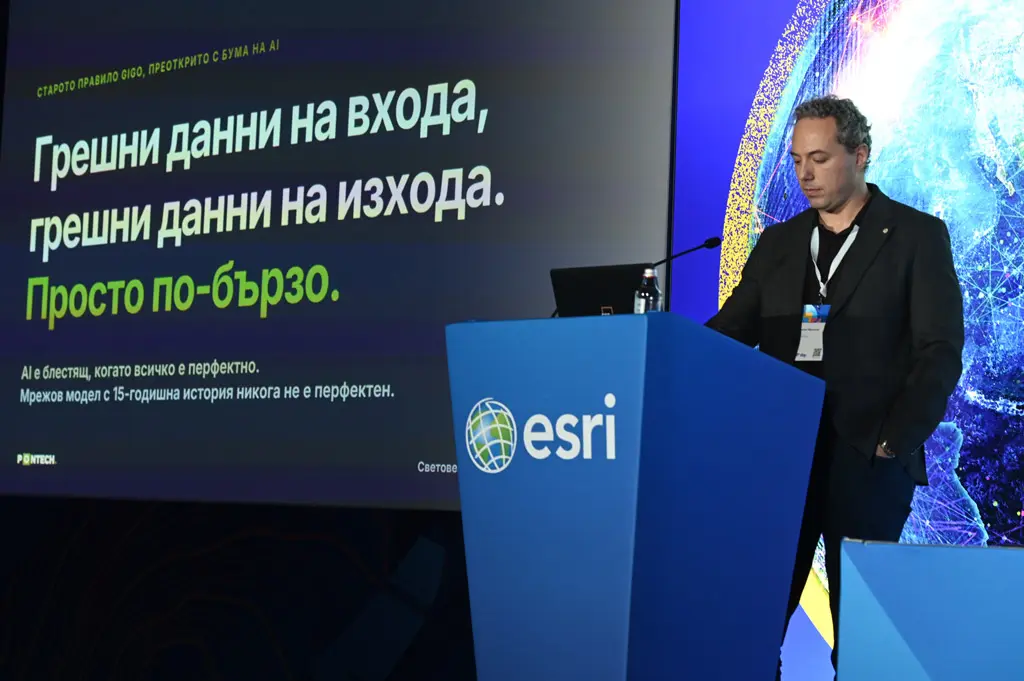
The old rule of garbage in, garbage out holds just as true in the age of AI. The difference is that the chaos arrives faster.
The PONTECH approach
Three workstreams run in parallel:
1. Correction at the source. Data is fixed in the production Geometric Network, while all users and integrations keep working.
2. Accelerated test migrations. We use Turgon, an agentic migration platform backed by Schneider Electric. Each iteration shows what is still left to correct.
3. Integrations in parallel. Links to ADMS, asset management, WFM, metering and SAP are built and tested directly against the Utility Network.
At go-live, the company has one GIS instead of two, clean data and working integrations, with no planned downtime.
Months into weeks? Yes, when the data is ready.
Thank you to Esri Bulgaria for the invitation and the organisation, and to everyone who showed interest in the topic. Many told us after the talk that it made them stop and ask whether they are doing their GIS well enough.
Preparing for a migration to Utility Network? Contact us at info@pontechrd.com. We will tell you honestly what state your data is in and how fast it can be migrated.